
Planning a full house renovation in Jersey: what to expect

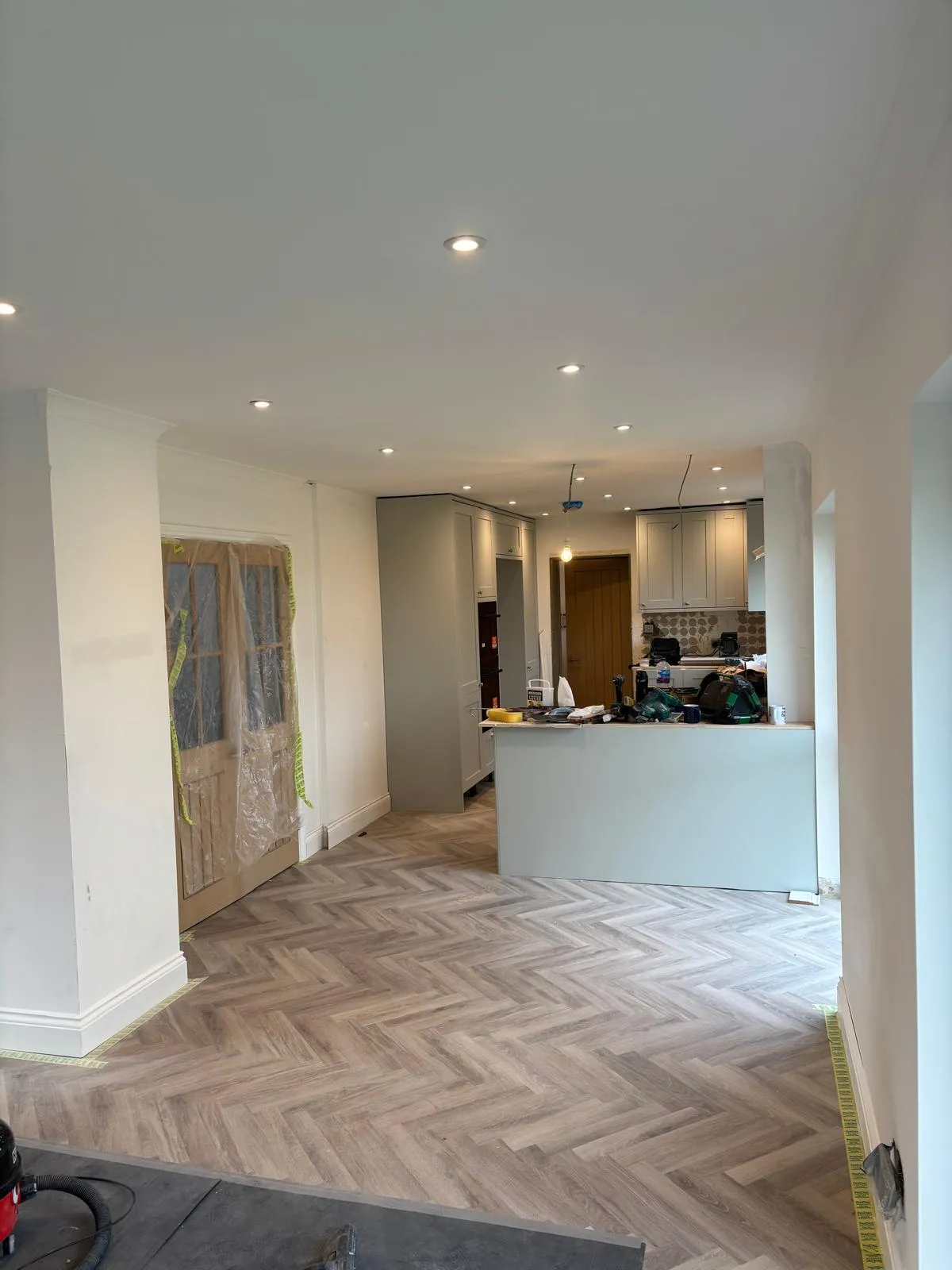
A full renovation is a different animal from a room-by-room refresh. Done well, it’s one continuous, properly sequenced build; done badly, it’s a year of trades tripping over each other. Here’s the shape of a typical whole-house job, so you know what you’re signing up for.
The stages
Strip-out. Everything that’s going, goes — kitchens, bathrooms, old flooring, sometimes ceilings. This is where surprises surface (old wiring, damp, past DIY), so it pays to have contingency in the budget before this stage, not after.
Structure. Knock-throughs, steels, new openings. On our recent four-bed renovation, the headline move was taking out a central stone fireplace and opening the kitchen and living room into one space under a structural beam. Structural work is noisy and dusty but usually quicker than people expect — it’s the making-good that takes time.
First fix. Wiring, plumbing and underfloor heating go in while the walls and floors are open. Decisions you make here — socket positions, lighting circuits, where the boiler lives — are cheap now and expensive later, so this is the stage where a good builder pushes you to decide early.
Plastering and screeds. The house goes from building site to blank canvas. Self-levelling over underfloor heating gives a flat, true base for the final floors.
Second fix and finishes. Kitchens, bathrooms, flooring, doors, panelling, decoration. This is the longest-feeling stage because progress is visible but detailed — tiling, niches, panelled walls and trim are slow-by-nature work.
Snagging and handover. The walk-round at the end, with a list, and nobody signs off until it’s done.
What makes or breaks the job
It’s almost always sequencing. Trades arriving in the wrong order means re-work; decisions left late mean trades standing idle. With one person planning the programme and coordinating everything — the way we run every PBLS job — the build keeps moving and the budget stays where it was agreed.
Living through it
Be honest with yourself about staying in the house. Strip-out and structure stages are genuinely disruptive; many clients move out for those and come back at second fix. Your builder should be able to tell you which weeks will be the worst — ask.
Thinking about it?
The cheapest part of any renovation is the conversation before it starts. Get in touch and Stuart will walk the house with you, talk through what’s structural and what’s cosmetic, and give you an honest view of scope before you commit to anything.